When most folks hear “Chicago-style pizza,” they think deep-dish. They picture a thick, high-seated crust with plenty of room for tomato sauce, cheese and everything else you could want on a pizza. It’s understandable — basically all pizza billed as Chicago-style is deep dish. Many don’t even know that there is another type of Chicago-style pizza.
But there is. And there’s nothing quite like it. It’s called tavern-style pizza, and once you try it, it may become your new favorite Chicago-style pizza. For many Chicagoans, tavern pizza is the default. It’s shareable, crunchy and utterly unique. Below, you’ll find everything you need to know about Chicago tavern-style pizza, including what it is and how it’s made.
What Is Tavern-Style?
Tavern-style pizza — also called thin-crust or square-cut pizza by many Chicagoans — is defined by three primary characteristics:
- A thin “cracker” crust: The crust of a tavern-style pizza consists of thin, unleavened dough that’s baked until it has a crisp crunch similar to a cracker. Where deep-dish crusts are thick and chewy, tavern-style pizzas shatter into bits when you bite down on them.
- A layer of toppings: On a tavern-style pizza, toppings and ingredients are applied all the way up to the edge of the crust. As a result, the sauces, seasonings and other ingredients can be enjoyed in each bite of the pizza. You’ll especially love this method if you’re someone who dislikes a bite of plain crust.
- A tavern or “party” cut: Perhaps the most iconic aspect of the tavern-style pizza is the signature tavern cut. While other pizzas are cut into triangular slices, tavern-style pizzas are cut into squares. This cut makes them easy to grab and eat, which is perfect for parties and gatherings where you’re likely to have a drink in your other hand.
These aspects form the basis of a long-standing approach to pizza that has filled pubs and restaurants for years. Ask any lifelong Chicagoan. They’ll likely tell you that this is the style of pizza they ate most often growing up. It’s the taste and texture they think of first when they hear the word “pizza.” The tradition that made those memories possible is alive and well in Chicago, even if it isn’t always recognized the way deep dish is.
Tavern-Style Pizza vs. Deep-Dish Pizza
Tavern style is unlike deep dish in terms of texture, taste and toppings. The differences also extend to where these pizzas are enjoyed.
Deep-dish is an entire meal unto itself. It’s rich and dense. Many diners even eat it with a fork and knife. As such, many choose deep-dish when they have time to sit down and enjoy it fully. This could be in a restaurant, at home during a night in or at a ball game.
Tavern-style pizza is different. Because the slices are smaller and thinner, it’s easier to handle and eat while doing other things, such as drinking, chatting or throwing darts. As a result, it’s a staple of parties and other social events where the focus is less on the food and more on the environment. Of course, many people still prefer tavern-style outside these more casual settings.
The choice comes down to personal preference. Enjoy a hearty bite of deep-dish at a party or munch on a slice of tavern-style at a restaurant by yourself. There are no rules — it’s up to you!
Where Tavern-Style Pizza Originated
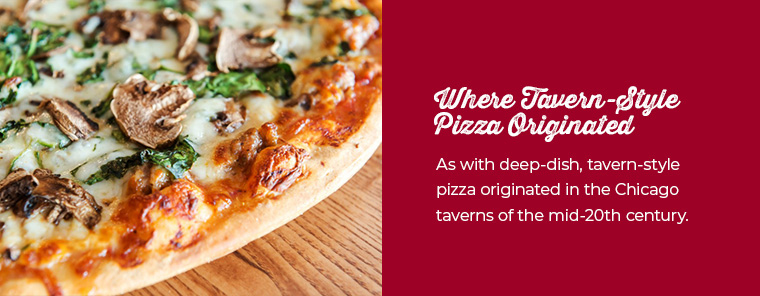
As with deep-dish, tavern-style pizza originated in the Chicago taverns of the mid-20th century. There’s some debate as to who exactly originated this iconic thin crust and square cut. Either way, many taverns used this handy new pizza to encourage customers to buy more drinks. Some even offered the pizza for free.
From there, it spread across the city and beyond. Over the subsequent decades, tavern-style pizza became ubiquitous in Chicago.
The Anatomy of a Tavern-Style Pizza
Let’s talk logistics. What actually goes into a tavern-style pizza? It seems pretty simple on its face, but a truly great tavern-style pizza takes a deft hand and precise technique. Together, they can turn a solid pizza into the stuff of legend.
The two most important techniques involve the crust and the toppings, respectively.
Create a Crust With Some Snap
Any good Chicago tavern-style pizza crust recipe is going to emphasize the crust’s crunch. The snap when you bite into the crust is half its appeal, so the chef’s job is to make that snap happen.
First, a low-hydration dough is necessary. Remember how some people call the thin crust a cracker crust? This dough will help the crust achieve that snappy, brittle cracker quality.
The crust can be further strengthened by running the low-hydration dough through a sheeter before cooking. The sheeter will compress the dough, removing air bubbles and creating a denser base for cooking.
Many pizzerias take this commitment to density further by cooking the dough directly on the oven deck. As a result of the extreme heat, the crust becomes extra crispy and sturdy — exactly what’s needed to nail that iconic thin-crust crunch.
Spread Those Toppings From Edge to Edge
A proper tavern-style pizza has toppings across nearly the entire surface. There may be some spots near the edges where the crust pokes through, but there should be no inch-thick crust on the end of each piece. That means more toppings and more flavor throughout the whole pizza.
The dough is covered in sauce and toppings from end to end. The specifics will vary, but many taverns prefer an oregano-forward tomato sauce and add fennel sausage. The sausage and other toppings may even be layered under the cheese to meld and enhance both flavors. Whatever’s put on the pizza, every ingredient is spread from edge to edge so every bite is as delicious as the last.
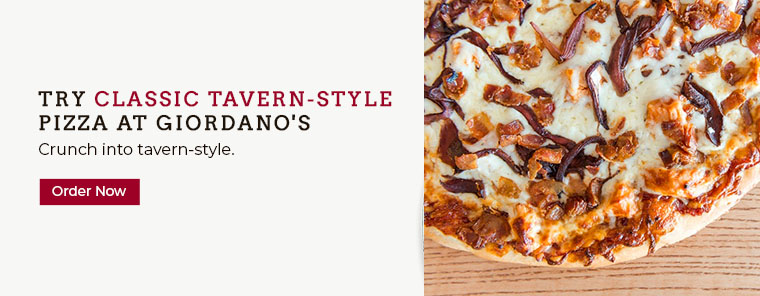
Try Classic Tavern-Style Pizza at Giordano’s
If you’ve got a hankering for tavern-style pizza, Giordano’s is the place to go. We’ve been crafting authentic pies since Mama Giordano’s famous Italian Easter Pie in Torino, Italy. In the decades since, we’ve taken that homegrown dish and branched into every pie you can think of, including Chicago’s own styles. From deep-dish to tavern-style, we have you — and your catering needs — covered.
To learn more about our approach to tavern-style pizza, try a pie for yourself today!